Why upgrade if PQ signatures are not yet proven? The dirty secret of efforts to upgrade blockchains to post-quantum cryptography is that no one is sure if any of them work. None of the signatures being considered by major blockchains as quantum-resistant upgrades have been 100% proven to work. Until a quantum computer is invented, we won’t know for certain if they can successfully protect against an attack. Some may fall to an attack even before Q Day using existing computer technology. The National Institute of Standards and Technology tested 69 post-quantum candidate algorithms, and two of them — Rainbow and SIKE — were broken with classical computers during testing. The three digital signature schemes it recommends are its best guess as to which ones are most likely to survive a quantum attack. It selected the lattice-based CRYSTALS-Dilithium (ML-DSA) as the primary scheme, another lattice-based scheme called Falcon (FN-DSA) for use cases that demand smaller signatures an...

Everything that happened in crypto news in Asia over the past seven days: Asia Express.
- Hong Kong to set up tokenized bond platform
- Philippines scraps Telegram ban after compliance deal
- Japan central bank may trial tokenized deposits
- Startale, Watanabe eyes onchain yen carry trade
- South Korea wants its finfluencers to disclose their portfolios
- Tax office’s tech illiteracy exposed
- Nansen expands to Bhutan’s SAR
Hong Kong to set up tokenized bond platform
Hong Kong intends to set up a digital asset platform for tokenized bonds this year, the city’s Financial Secretary Paul Chan Mo-po said in his budget speech.
The platform will be established by CMU OmniClear Holdings, an entity created last October by the Hong Kong Monetary Authority’s investment arm, the Exchange Fund.

The platform will integrate with regional tokenization infrastructure and gradually expand to support additional digital assets, reinforcing Hong Kong’s role in digital asset development, Chan said.
He added that the government issued its third batch of tokenized bonds in the fourth quarter of 2025, totaling 10 billion Hong Kong dollars, which is about $1.28 billion. The government intends to continue issuing tokenized bonds.
Philippines scraps Telegram ban after compliance deal
Telegram has avoided a full-scale ban in the Philippines after reaching an agreement to establish a direct response channel with local authorities.

In a Facebook post on Friday, the Department of Information and Communications Technology said that Telegram has committed to a zero-tolerance policy against illicit activities, including child sexual abuse material and illegal gambling.
A day earlier, the DICT and the Cybercrime Investigation and Coordinating Council said they were monitoring the messaging platform following reports of illegal activity. Authorities said they preferred coordination but warned that a full ban remained a last-resort option.
Officials had raised concerns that Telegram lacks a physical office in the country, which they said complicates efforts to obtain information about suspects behind alleged crimes.
Japan’s central bank may trial tokenized deposits
The Bank of Japan is examining whether part of its current account balances could be represented as blockchain-based tokens, according to Nikkei.
Such a framework could enable round-the-clock large-value transfers, support near-instant cross-border payments and allow automated institutional settlements.
Officials plan to conduct proof-of-concept trials with private financial institutions to assess technical feasibility and market demand, and the framework could also make integration with stablecoins issued by Japan’s major banks easier.
The initiative is separate from the digital yen project, which focuses on a retail-oriented central bank digital currency intended for use by individuals and businesses as a payment instrument.
Read also
Features
Crypto kids fight Facebook for the soul of the Metaverse
Features
Blockchain Startups Think Justice Can Be Decentralized, but the Jury Is Still Out
Startale, Watanabe eyes onchain yen carry trade
Startale Group has unveiled JPYSC, a yen-pegged stablecoin issued through SBI Shinsei Trust Bank.
In an interview with Cointelegraph, Startale CEO Sota Watanabe said the stablecoin was designed to bring the yen carry trade onchain. The strategy relies on Japan’s low interest rates, allowing investors to borrow yen at low cost, convert it into other currencies and deploy the proceeds into higher-yielding assets.
Moving the trade onchain could, in theory, extend the yen’s low borrowing costs into decentralized finance. Watanabe said he is in talks with “top players” in DeFi and US financial institutions that have expressed interest, though he declined to name them.
Startale is targeting a second-quarter launch for the stablecoin and aims to enable an onchain carry trade, pending approval from Japanese authorities.
South Korea wants its finfluencers to disclose their portfolios
South Korea is weighing new rules requiring social media personalities promoting cryptocurrencies and stocks to disclose their holdings and any compensation received.
Democratic Party lawmaker Kim Seung-won is drafting amendments to related regulations that would mandate transparency from repeat online promoters offering investment advice.
Read also
Features
Crypto kids fight Facebook for the soul of the Metaverse
Features
Blockchain Startups Think Justice Can Be Decentralized, but the Jury Is Still Out
Under the proposal, violations could draw penalties comparable to those for insider trading or market manipulation, as complaints tied to quasi-investment advisors have surged in recent years.
The push aligns with broader global efforts by regulators in the UK, US and EU to crack down on undisclosed financial promotions by so-called finfluencers.
Tax office’s tech illiteracy exposed
South Korea’s National Tax Service (NTS) issued a press release to highlight its successful asset seizure, but inadvertently disclosed acrypto wallet seed phrase, resulting in the loss of almost $5 millionin “Pre-Retogeum” tokens.
Blockchain data showed the tokens were transferred out shortly after the disclosure, with transaction flows matching reports that the mnemonic phrase had been fully visible in an accompanying image.
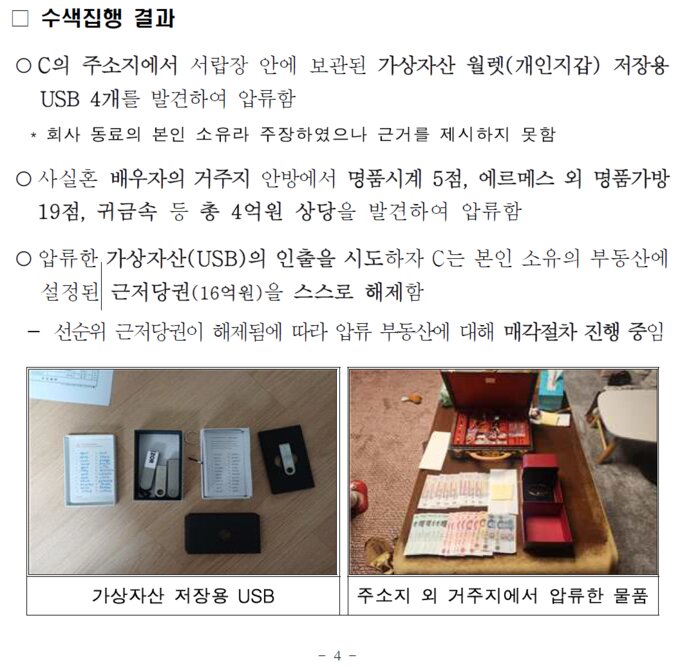
Associate professor Jaewoo Cho, who leads Hansung University’s onchain data lab, said the actual damage was negligible as the affected tokens are difficult to liquidate. He said that the incident could serve as a blessing in disguise by prompting proper crypto management practices in the public sector.
The breach follows a separate case in which seized Bitcoin vanished from police storage before a mysterious actor returned them.
NTS has issued an official apology to citizens and said it has requested police assistance in recovering public assets.
Nansen expands to Bhutan’s SAR
Blockchain data company Nansen announced its expansion into Gelephu Mindfulness City (GMC) in southern Bhutan.

The city is a Special Administrative Region focused on long-term economic development and includes crypto as part of its strategy, having previously announced custody infrastructure and tokenization initiatives.
Nansen CEO Alex Svanevik told Cointelegraph that GMC was selected for its vision and that Bhutan stood out for integrating digital assets into the region’s economic framework. He added that the expansion does not replace the company’s operations in Singapore.
- Get link
- X
- Other Apps
- Get link
- X
- Other Apps
Comments
Post a Comment