Why upgrade if PQ signatures are not yet proven? The dirty secret of efforts to upgrade blockchains to post-quantum cryptography is that no one is sure if any of them work. None of the signatures being considered by major blockchains as quantum-resistant upgrades have been 100% proven to work. Until a quantum computer is invented, we won’t know for certain if they can successfully protect against an attack. Some may fall to an attack even before Q Day using existing computer technology. The National Institute of Standards and Technology tested 69 post-quantum candidate algorithms, and two of them — Rainbow and SIKE — were broken with classical computers during testing. The three digital signature schemes it recommends are its best guess as to which ones are most likely to survive a quantum attack. It selected the lattice-based CRYSTALS-Dilithium (ML-DSA) as the primary scheme, another lattice-based scheme called Falcon (FN-DSA) for use cases that demand smaller signatures an...

Everything that happened in crypto news in Asia over the past seven days: Asia Express.
Bitdeer liquidates entire Bitcoin treasury, holdings fall to zero
Bitdeer has sold all of its corporate Bitcoin holdings.
The Singapore-headquartered Bitcoin miner said in its weekly report that its “pure holdings,” which excludes customer deposits, has now dropped to zero.
Bitdeer held 943.1 BTC a week ago before its corporate treasury was liquidated, down from 2,470 BTC in November.
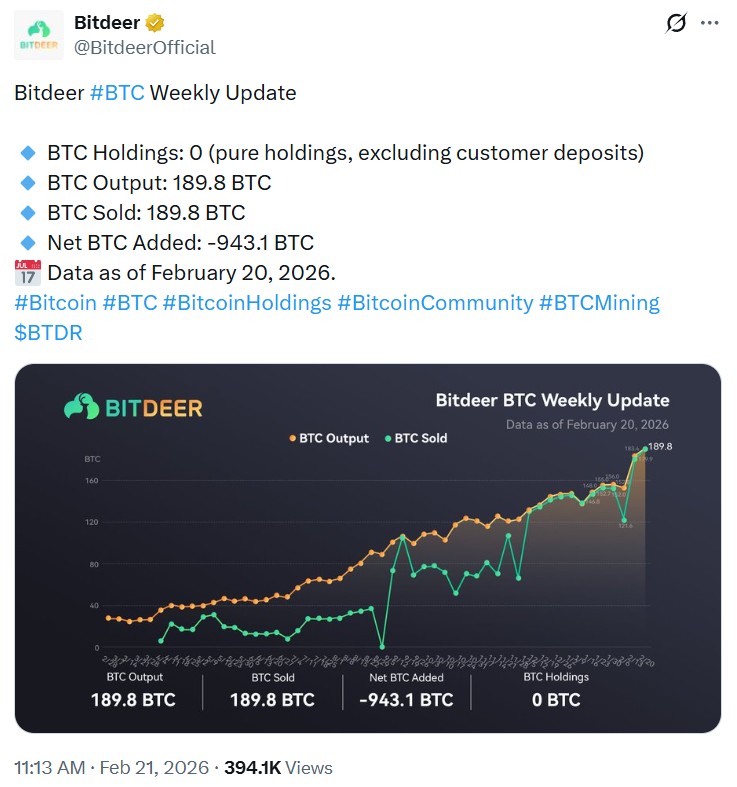
Several Bitcoin miners, including Bitdeer, have reduced their reliance on Bitcoin after the last halving reduced block rewards to 3.125 BTC from 6.25 BTC, and wish to expand into AI infrastructure.
“We are currently evaluating multiple non-binding powered land acquisition opportunities, and we believe it is prudent to prepare liquidity now,” Bitdeer tweeted, adding that it will continue mining Bitcoin.
The next Bitcoin halving is expected to occur around April 2028.
SBI offers XRP to its security token investors
SBI Holdings will issue its first security token corporate bond in March. It will trade on Osaka Digital Exchange’s START platform and offer XRP rewards to investors.
The digital bond will be issued and managed on private blockchain “ibet for Fin” instead of Japan’s traditional securities depository system, and will become the first security token corporate bond listed on START.
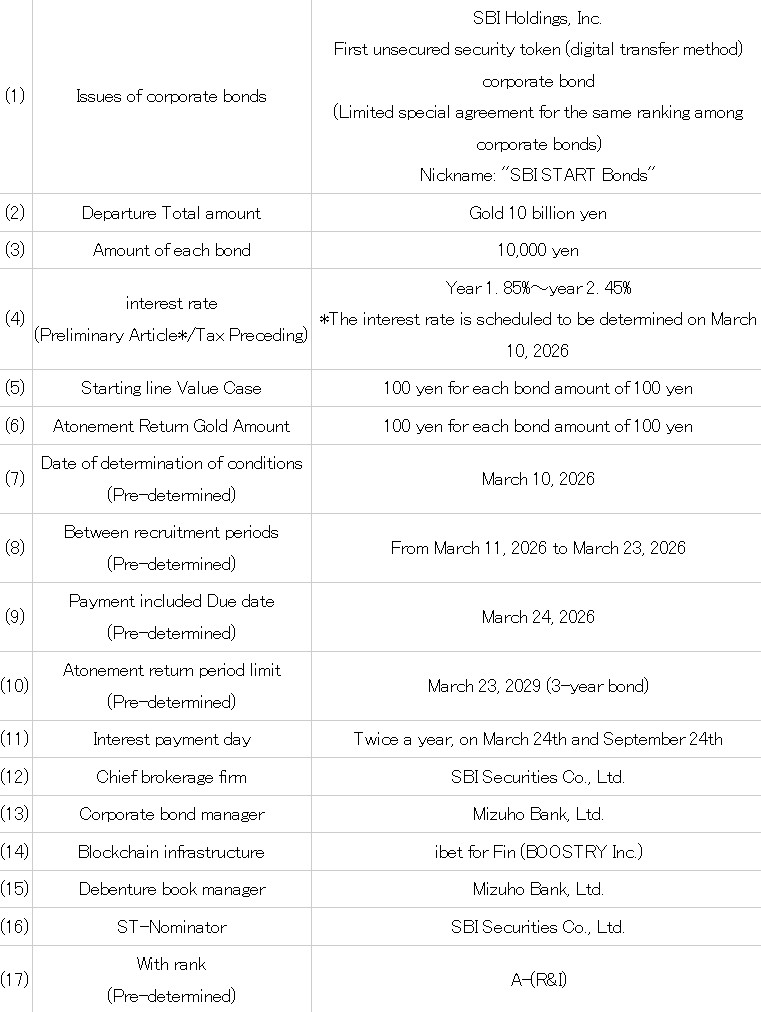
Investors who purchase the bonds during the offering period will also receive XRP as a promotional incentive.
SBI Holdings is one of Japan’s largest financial groups and has been active in crypto for years, including as a major shareholder in Ripple, the San Francisco fintech company whose products are built around the XRP Ledger.
Read also
Features
Crypto kids fight Facebook for the soul of the Metaverse
Features
Blockchain Startups Think Justice Can Be Decentralized, but the Jury Is Still Out
Metaplanet rejects accusations of hidden Bitcoin losses
Simon Gerovich rejected claims that Metaplanet misrepresented its Bitcoin strategy and related disclosures.
In a Friday X post, the Metaplanet CEO said the Bitcoin treasury company reported all of its BTC purchases and denied any misconduct.
Gerovich was responding to criticism circulating on social media that Metaplanet delayed or withheld information about Bitcoin purchases funded with shareholder capital, concealed losses and failed to fully disclose key terms of its BTC-backed borrowings.
According to Gerovich, Metaplanet disclosed four Bitcoin purchases in September, acquiring a total of 11,832 BTC during the month.
With 35,102 BTC, Metaplanet holds the fourth-largest stash among publicly traded companies and the largest in Asia.

Kucoin in hot Thai water
Thailand’s securities regulator has extended the deadline for ERX, the operator of KuCoin’s local branch, to address its capital deficiency or risk shutting down.
KuCoin’s deadline was pushed to March 30 from Feb. 12. The exchange temporarily suspended operations on Jan. 3 after its capital fund level fell below 60% of the minimum requirement on Dec. 29.
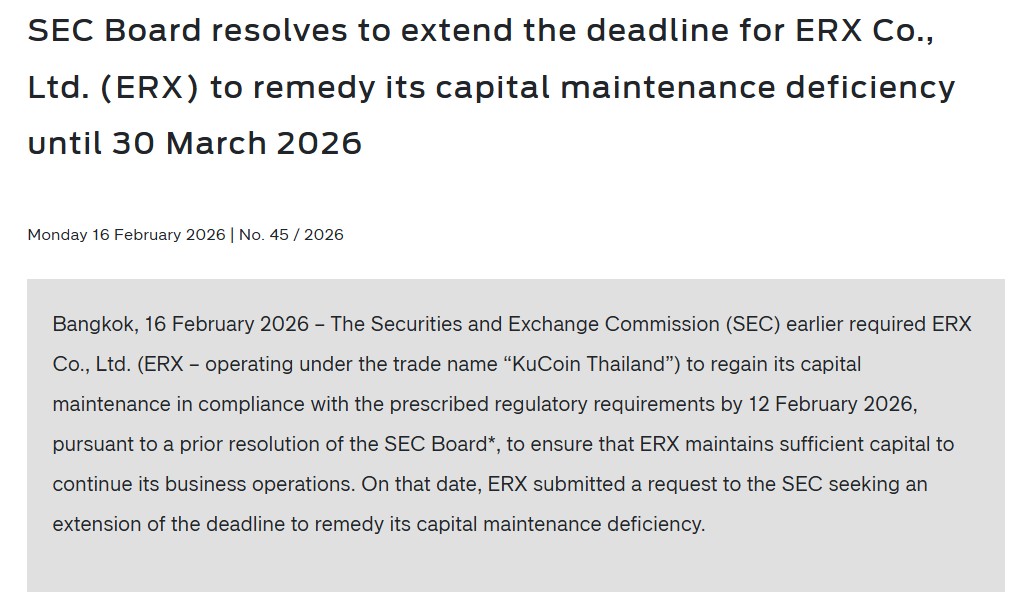
Despite dropping below the threshold, Thailand’s Securities and Exchange Commission said its inspection found that client assets remained secure.
The exchange is also under pressure in the European Union, where it is licensed through Austria. The country’s Financial Market Authority said Thursday that KuCoin no longer has adequate key function holders to prevent money laundering and ordered it to restore compliance as soon as possible. The regulator also barred KuCoin from onboarding new customers.
Read also
Features
Crypto kids fight Facebook for the soul of the Metaverse
Features
Blockchain Startups Think Justice Can Be Decentralized, but the Jury Is Still Out
South Korea’s mysterious crypto thief returns what they took
A mysterious hacker has reportedly returned Bitcoin that South Korean prosecutors lost in 2025.
The Gwangju District Prosecutors’ Office said its official wallet unexpectedly received 320.88 Bitcoin (about $21 million) on Tuesday.
While intent cannot be determined from blockchain transactions alone, prosecutors said they asked local exchanges to freeze any onramp accounts linked to the hacker’s wallet.
The cryptocurrency was lost in August 2025, which authorities blamed on phishing campaigns.

The Shibuya stablecoin incident
Digital Garage, JCB and Resona Holdings will test stablecoin payments at a Tokyo cafe next week, allowing customers to pay with USDC and JPYC using self-custody wallets.
The pilot will take place at Pangaea Cafe & Bar, located in Shibuya, a major commercial and entertainment district in Tokyo known for its shopping, nightlife and the iconic Shibuya crossing.
The week-long trial, scheduled for Feb. 24 to March 2, will let customers settle purchases in USDC on Base and JPYC on Polygon, with merchants ultimately receiving payment in Japanese yen.
Japan is the first major economy in East Asia to launch a regulated stablecoin pegged to its local currency.
Bank of Korea doesn’t budge on stablecoin issuance
The Bank of Korea (BOK) has renewed its call for won-pegged stablecoins to be issued only by commercial banks.
According to reports, the central bank described won stablecoins as “currency-like substitutes” and warned that privately issued tokens could undermine monetary policy and pose risks to financial stability.
The BOK said allowing non-bank entities to issue stablecoins could violate South Korea’s long-standing separation of banking and commerce. It argued that banks, which are subject to capital, governance and compliance requirements, should be granted issuance rights first, with any expansion to non-banks considered only after further risk assessments.
Disagreements over who should be allowed to issue stablecoins have delayed progress on South Korea’s broader crypto regulatory framework.
- Get link
- X
- Other Apps
- Get link
- X
- Other Apps
Comments
Post a Comment